
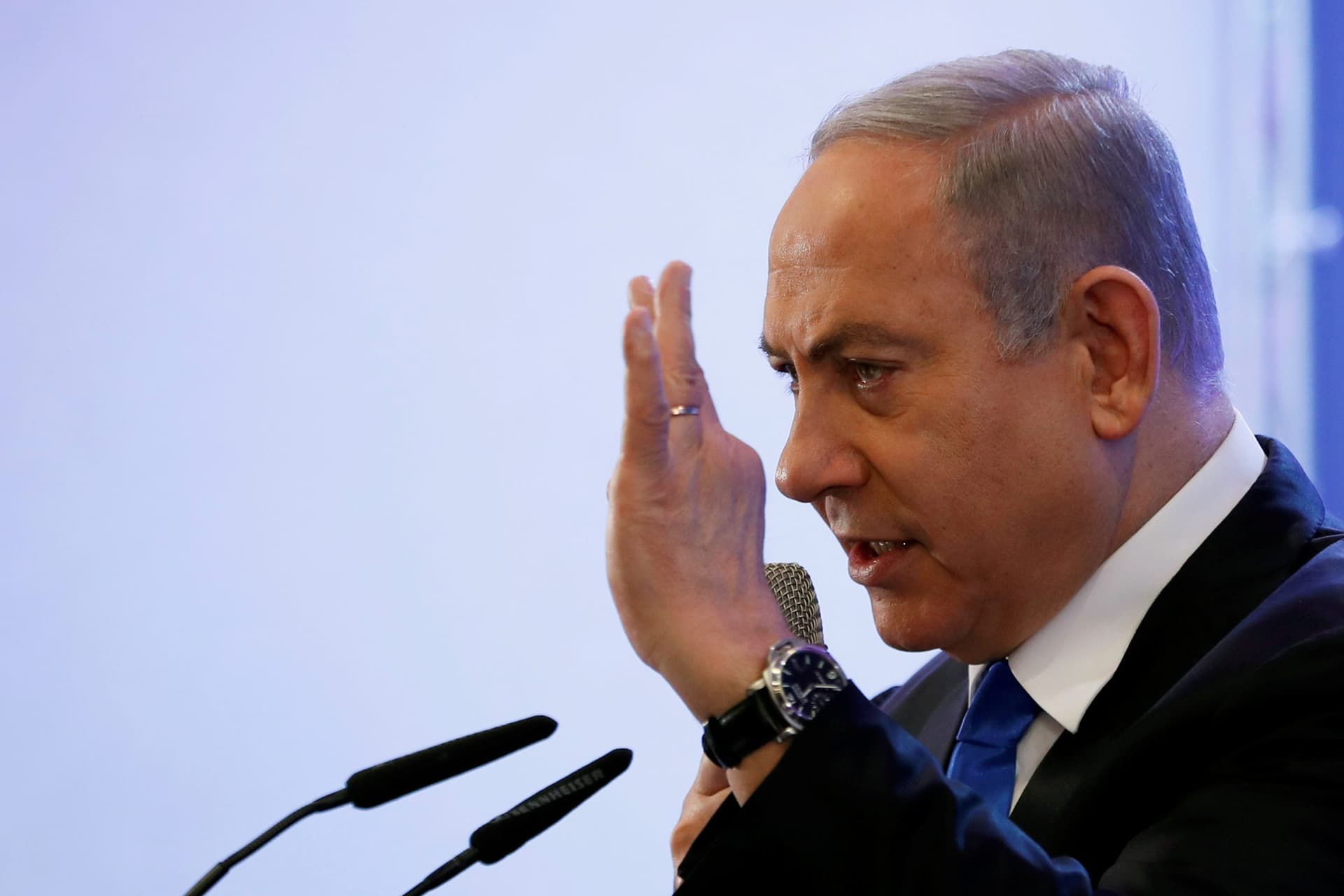
Israeli Prime Minister Benjamin Netanyahu said on Wednesday Bernie Sanders was wrong to call him a racist during a debate among contenders for the U.S. Democratic presidential nomination, but shied away from attacking the senator in return.
“I am not intervening in the U.S. election,” Netanyahu replied when asked on Israeli Army Radio about what an interviewer termed Sanders’ personal attack on him at Tuesday’s event in Charleston, South Carolina.
Sanders, who has been critical of the right-wing leader’s policy toward Palestinians, described Netanyahu as “a reactionary racist who is now running” Israel.
Pressed further for his thoughts about Sanders, who if elected would be the first Jewish president in U.S. history, Netanyahu said: “What I think about this matter is that he is definitely wrong. No question about it.”
Asked about possible confrontation with Sanders should the self-described democratic socialist win the White House, Netanyahu said that as prime minister he had stood up to U.S. presidential opposition to his policies before and would be able to do so again.
Netanyahu had a contentious relationship with Barack Obama, Republican Donald Trump’s predecessor as president, with the Iranian nuclear deal and Israel’s settlement policy in the occupied West Bank main areas of friction.
Israel’s longest-serving leader, Netanyahu is fighting for his political survival in a national election on Monday, the country’s third in less than a year after inconclusive ballots in April and September.
During the campaign, Netanyahu has steered clear of commenting directly on the U.S. election.
But he has praised Trump as the best friend Israel has ever had in the White House, noting the president’s decisions to withdraw from the 2015 Iran nuclear deal, recognize Jerusalem as Israel’s capital and move the U.S. embassy to the city.
Netanyahu has also tried to play on many Israelis’ suspicions about the loyalty of Israel’s 21 percent Arab minority, political analysts say.
The right-wing Likud party leader says his main challenger, former general Benny Gantz, would need the support of an Arab party to form a governing coalition, effectively tying his hands in pursuing any military action in the region.
The tactic forced Gantz to deny that a government led by his centrist Blue and White party would rely on the Joint List, an Arab coalition mostly supported by descendants of Palestinians who lived in what became Israel after its creation in 1948.
Israel’s Arab community has long accused Netanyahu, in power from 1996-1999 and since 2009, of fear-mongering. On election day in 2015 Netanyahu urged his voters to turn out, warning that Arabs were flocking to the polls “in droves.”
Netanyahu, who held a campaign rally in an Arab town on Wednesday, has said he has no dispute with the Arab public in general, only with Arab politicians pursuing policies he opposes.
(Editing by Timothy Heritage)