
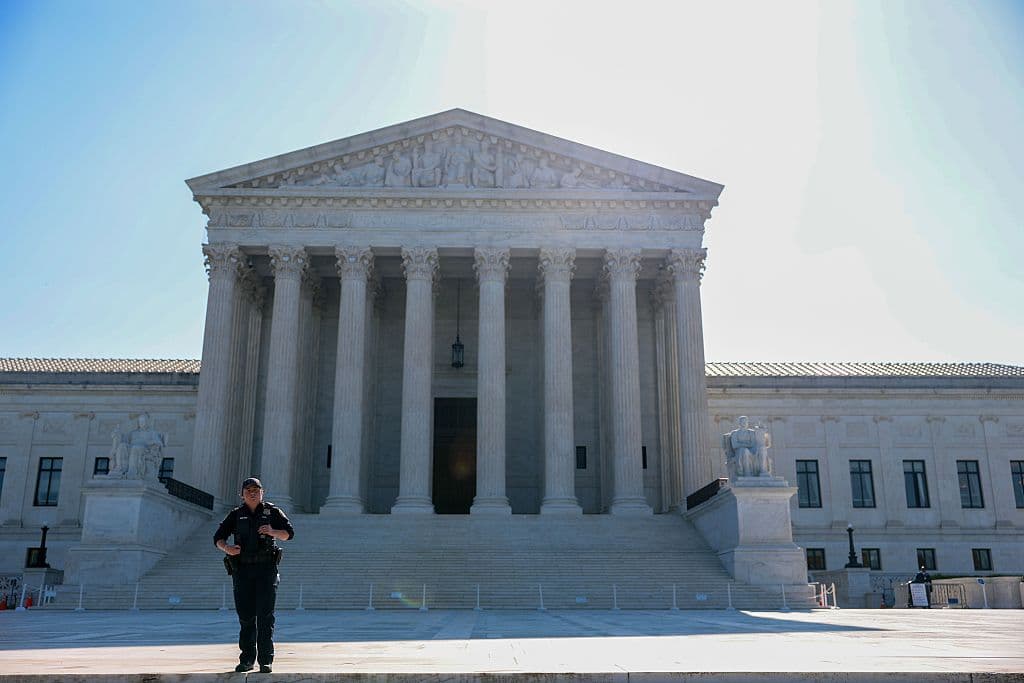
A closely watched redistricting battle out of Louisiana reached a turning point Wednesday, as the Supreme Court of the United States struck down the state’s most recent congressional map, setting off new questions about how voting laws will be applied moving forward.
According to the New York Post, the dispute centered on a 2024 map that created a second majority-Black congressional district in Louisiana.
That map was put in place after lower courts ruled that the state needed to comply with protections outlined in the Voting Rights Act of 1965.
State officials, backed by the Trump administration, challenged those changes, arguing the map relied too heavily on race and violated the Fourteenth Amendment to the United States Constitution.
In a 6-3 decision, the court sided with those challengers, with the conservative majority voting to discard the revised district lines.
Writing for the majority, Samuel Alito said the lower court ruling had gone too far in forcing Louisiana to redraw its map. However, the opinion stopped short of declaring Section 2 of the Voting Rights Act unconstitutional, an outcome many observers had anticipated as a possibility.
“ompliance with 2, as properly construed, can provide such a reason ,” Alito wrote. “Correctly understood, 2 does not impose liability at odds with the Constitution, and it should not have imposed liability on Louisiana for its 2022 map.”
During earlier arguments, principal deputy solicitor general Hashim Mooppan framed the issue as one of equal treatment, telling the court: “If these were white Democrats, there’s no reason to think they would have a second district, none.”
“And so what is happening here is, their argument is, ‘Because these Democrats happen to be black, they get a second district.’ If they were all white, we all agree they wouldn’t get the same,” he added.
Louisiana’s population is roughly one-third African American, and before the 2024 redraw, only one of its congressional districts had a Black majority. The new map briefly increased that number to two.
The case drew additional attention when the court took the unusual step of asking both sides to revisit their arguments with consideration of both the Fourteenth Amendment to the United States Constitution and the Fifteenth Amendment to the United States Constitution, signaling a broader review of how race can factor into redistricting.
Analysts say the ruling could have ripple effects beyond Louisiana. One estimate from advocacy groups suggests that Republican-led states in parts of the South and Midwest could revisit multiple districts in light of the decision.
Still, it remains uncertain how quickly any changes might take place—or whether they would influence the balance of power in upcoming elections, including the 2026 midterms.
For now, the ruling underscores the ongoing legal tug-of-war over how to balance protections against racial discrimination in voting with constitutional limits on the use of race in drawing political boundaries.